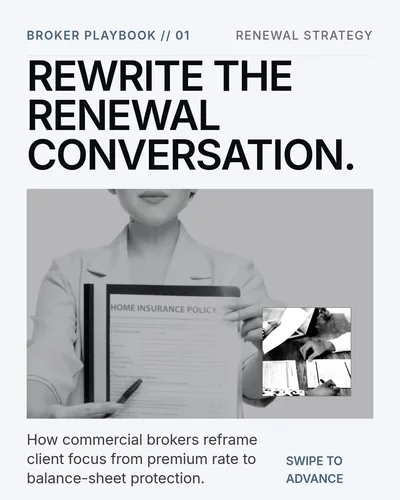
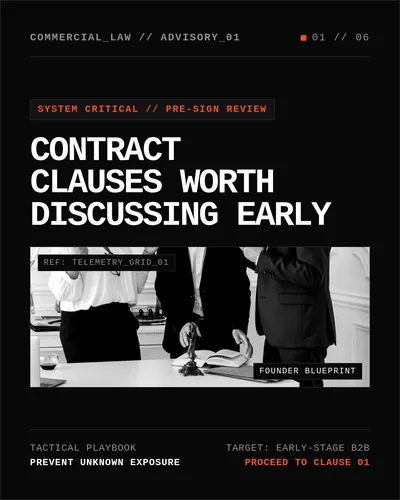
LinkedIn Carousel Templates for Thought Leadership
Use these LinkedIn carousel templates to turn expertise, opinions, lessons, and frameworks into strong thought leadership posts.

Thought leadership carousels work when they make the reader see a familiar problem differently. They do not need to be loud, viral, or overdesigned. They need a clear point of view, a practical structure, and enough evidence or experience to feel credible.
The short version: the best LinkedIn carousel templates for thought leadership are the contrarian insight, repeated mistake, before-and-after, field note, framework, decision guide, myth vs reality, case pattern, checklist, and prediction templates. Each template should start with a specific hook, develop one idea, and end with a useful takeaway.
Google’s people-first content guidance is useful here: strong content should provide original information, analysis, or insight beyond the obvious and should leave readers feeling they learned enough to achieve their goal. Google people-first content
What thought leadership is not
Thought leadership is not:
- A generic motivational post.
- A list of obvious tips.
- A recycled quote.
- A “hot take” with no reasoning.
- A carousel that says what everyone already knows.
- A personal story with no lesson.
Thought leadership is:
- A specific point of view.
- A useful pattern.
- A decision rule.
- A lesson from experience.
- A framework the reader can apply.
- A new way to explain an old problem.
Template 1: The contrarian insight
Use this when you disagree with the usual advice.
Hook format:
“The problem is not [common explanation]. It is [deeper problem].”
Slide structure:
| Slide | Job |
|---|---|
| 1 | State the contrarian insight |
| 2 | Explain the usual belief |
| 3 | Show why that belief is incomplete |
| 4 | Reveal the deeper issue |
| 5 | Give an example |
| 6 | Offer the better rule |
| 7 | Explain how to apply it |
| 8 | End with a practical CTA |
Example title:
“Your content problem is not consistency. It is weak positioning.”
Template 2: The repeated mistake
Use this when you see the same mistake across clients, teams, or peers.
Hook format:
“I keep seeing smart teams make the same mistake with [topic].”
Slide structure:
- Name the repeated mistake.
- Explain why smart people make it.
- Show the cost.
- Give a real-world pattern.
- Explain what to do instead.
- Give a simple checklist.
- End with a question or save CTA.
Example title:
“I keep seeing founders confuse traction with retention.”
Template 3: The before-and-after
Use this when you can show a transformation.
Hook format:
“Before: [messy state]. After: [clearer state].”
Slide structure:
| Slide | Job |
|---|---|
| 1 | Before/after hook |
| 2 | What was broken |
| 3 | Why the old approach failed |
| 4 | The key decision |
| 5 | The new approach |
| 6 | What improved |
| 7 | What others can copy |
| 8 | CTA |
Example title:
“Before: 12 dashboards. After: 3 metrics people actually used.”
Template 4: The field note
Use this when you want to share a practical observation from recent work.
Hook format:
“One thing I noticed in [specific context] this week.”
Slide structure:
- What you noticed.
- Where it showed up.
- Why it matters.
- What most people assume.
- What the pattern actually means.
- The practical takeaway.
- CTA.
Example title:
“One thing I noticed in three founder calls this week.”
This format works because it feels current, concrete, and experience-based.
Template 5: The framework
Use this when you have a repeatable way to solve or understand a problem.
Hook format:
“Use this [number]-part framework before [important decision].”
Slide structure:
| Slide | Job |
|---|---|
| 1 | Framework title |
| 2 | Why the framework exists |
| 3 | Part 1 |
| 4 | Part 2 |
| 5 | Part 3 |
| 6 | Part 4 |
| 7 | Example application |
| 8 | Summary and CTA |
Example title:
“Use this 4-part audit before changing your pricing.”
Template 6: The decision guide
Use this when readers need to choose between options.
Hook format:
“Should you [option A], [option B], or [option C]?”
Slide structure:
- The decision.
- When option A works.
- When option B works.
- When option C works.
- Common wrong choice.
- Decision tree.
- Rule of thumb.
- CTA.
Example title:
“Should you hire, outsource, automate, or simplify?”
Template 7: Myth vs reality
Use this when the audience believes something that creates bad behavior.
Hook format:
“Myth: [common belief]. Reality: [better belief].”
Slide structure:
| Slide | Job |
|---|---|
| 1 | Myth vs reality hook |
| 2 | Why the myth is attractive |
| 3 | Where it breaks |
| 4 | What reality looks like |
| 5 | Example |
| 6 | Better rule |
| 7 | Practical takeaway |
| 8 | CTA |
Example title:
“Myth: More content creates more authority. Reality: Better constraints do.”
Template 8: The case pattern
Use this when you want to share a client or project lesson without turning it into a full case study.
Hook format:
“A client asked for [surface request]. The real problem was [diagnosis].”
Slide structure:
- The surface request.
- The hidden problem.
- What revealed it.
- What changed.
- What improved.
- The pattern.
- The lesson.
- CTA.
Remove confidential details. Share the pattern, not private facts.
Template 9: The practical checklist
Use this when the reader needs an action they can use immediately.
Hook format:
“Before you [action], check these [number] things.”
Slide structure:
- Checklist title.
- Why it matters.
- Items 1–2.
- Items 3–4.
- Items 5–6.
- The mistake to avoid.
- How to use it.
- CTA.
Example title:
“Before you publish a thought leadership post, check these 7 things.”
Template 10: The careful prediction
Use this when you want to make a forward-looking argument.
Hook format:
“I think [trend] will matter less than [deeper change].”
Slide structure:
- Prediction.
- What people are focused on.
- What they are missing.
- Evidence or reasoning.
- What changes for the reader.
- What to do now.
- Caveat.
- CTA.
A good prediction carousel should include uncertainty. That makes it more credible, not weaker.

Match the template to the idea, not the other way around.
How to write a stronger first slide
The first slide should be specific enough that the reader knows whether the carousel is for them.
Weak:
“How to improve your LinkedIn content”
Stronger:
“Your LinkedIn content is not too long. It is too unfocused.”
Weak:
“Tips for better strategy”
Stronger:
“Most strategy decks fail because they avoid decisions.”
Weak:
“How to be a thought leader”
Stronger:
“Thought leadership starts when you stop saying the obvious thing politely.”

Specific hooks make it easier for the right reader to stop.
How to generate these templates in SlideDrift
Use SlideDrift when you have a rough idea, notes, or a source article and want the carousel drafted quickly.
Example input:
Audience:
B2B consultants

Goal:
Create a thought leadership carousel using the myth vs reality template

Tone:
Direct and practical

Point of view:
Consultants do not need more content ideas. They need clearer constraints.

Include:
- Why broad advice fails
- A 3-part constraint system
- A final CTA asking readers to audit their next postSlideDrift’s docs explain that text input is useful for notes, outlines, drafts, and rough ideas, and that adding a short instruction can improve the output. SlideDrift create from text
Use templates without sounding templated
Templates are useful for structure, but the insight must be yours.
To avoid sounding generic:
- Add a specific audience.
- Include one real example.
- Use a clear point of view.
- Name the tradeoff.
- Include a practical caveat.
- Avoid exaggerated claims.
- Cut motivational filler.
- End with an action, not a slogan.
Final recommendation
Pick one template based on the idea you already have. Do not force every idea into the same format. Use SlideDrift to generate the first draft from your notes or URL, then edit the carousel until the point of view feels specific, useful, and credible.
FAQ
What is a thought leadership carousel?
A thought leadership carousel is a LinkedIn document post that presents a specific point of view, lesson, framework, decision rule, or practical insight in a slide-by-slide format.
What is the best LinkedIn carousel template for thought leadership?
There is no single best template. The strongest options are contrarian insight, repeated mistake, before-and-after, framework, decision guide, myth vs reality, and case pattern templates.
How do I make a thought leadership carousel less generic?
Use a specific audience, one real example, a clear point of view, practical caveats, and a concrete takeaway. Avoid broad motivational advice and obvious tips.
Can SlideDrift generate thought leadership carousels?
Yes. You can paste notes, rough ideas, text, or a public URL into SlideDrift and ask it to create a specific thought leadership carousel format.
Make your own carousel
SlideDrift drafts the slides from your text. You edit them, then export a PDF for LinkedIn.