LinkedIn Carousel Examples for SaaS Companies
30 LinkedIn carousel examples for SaaS companies, from help-doc tutorials and launch posts to customer stories and founder decisions, with slide plans.

The most useful LinkedIn carousels for SaaS companies teach buyers and users something they can apply, and bring in the product only where it helps. Think of a setup guide built from a help doc, a launch explained through the problem it fixes, or the lesson in a story a customer approved. Below are 30 example ideas in six groups, each with a slide plan and the material it comes from.
- Product education: setup guides, feature how-tos and mistake lists, from help docs.
- Onboarding and adoption: first steps and setup checks, from onboarding emails and support questions.
- Feature launches: the problem first, then what changed, from release notes.
- Customer stories: the lesson in a story the customer approved.
- Founder decisions: a tradeoff and the reasoning behind it.
- Research: what your own data shows, with the method beside it.
Teach first, then show the product
A SaaS carousel is worth a reader's time when it helps them understand a problem, choose a workflow, learn a feature, avoid a mistake or take a next step. If it only says "we launched this," it's an announcement. It becomes useful when it shows why the launch matters to the reader's work.
Product details still belong in the deck. Bring them in once the problem is clear, at the point where they help the reader follow or finish the task.
30 SaaS carousel examples
These are ideas to adapt, not posts by real companies. Swap the brackets for your own product, data and approved stories, and drop any idea you can't back with a source.
Product education
Build these from help docs, support macros and internal how-tos, when your product changes how a task gets done.
- "How to set up [workflow] in [number] steps"
- "The mistake teams make when using [feature]"
- "What to check before you automate [task]"
- "[Feature A] or [feature B]: which one fits your team?"
- "How to use [feature] without changing your whole workflow"
Slide plan: problem → old workflow → why it breaks → new workflow → example → checklist → next step.
Onboarding and adoption
Build these from onboarding emails, product tours, support tickets and customer success calls. The customer success examples cover adoption and renewal posts in more depth.
- "The first [number] things new users should set up"
- "The setup mistake that delays your first result"
- "How to tell if your account is set up correctly"
- "What to do in your first week with [product]"
- "A beginner's checklist for [workflow]"
Slide plan: the user's moment → the common mistake → the better setup → how to check it → checklist.
Feature launches and release notes
Don't open a launch carousel with the feature name. Start with the problem it fixes, then show what changed and who it helps.
- "You can now [do the task] without [old workaround]"
- "Why we built [feature]"
- "The workaround [feature] replaces"
- "[Number] ways to use [feature]"
- "What changed in [release], and who it helps"
Weak first slide: "Introducing Custom Reports."
Better first slide: "Stop rebuilding the same report before every meeting."
The better version names a problem the reader has, and the feature arrives later in the deck. The product marketing guide has more launch angles.
Slide plan: the problem → the old workaround → what changed → how it works → who it helps → next step.
Customer stories
A customer story should teach a lesson, not just show the logo. Use only details the customer approved, and when there's no approved result, show what changed instead of estimating one.
- "How [customer] changed their [process], and what you can copy"
- "The decision behind [customer]'s [approved result]"
- "What recurring onboarding questions taught us about [task]"
- "The hidden blocker in [industry] [workflow]"
- "A teardown of a [report] the customer agreed to share"
Slide plan: situation → problem → decision → what they changed → approved result or observed change → lesson → next step.
The case study guide shows how to keep each number with its source, timeframe and scope.
Founder decisions
A founder carousel should show judgment: the options you had, what you chose and why, including what you'd do differently.
- "The product tradeoff we chose, and why"
- "What a customer complaint changed in our roadmap"
- "The feature we decided not to build"
- "A pricing lesson from our first [number] customers"
- "How we changed our roadmap after [pattern] kept showing up"
Slide plan: the decision → the options → what we weighed → what we chose → what happened → what we'd tell another team.
The carousel ideas for founders have more angles from customer calls and strategy notes.
Research and product data
Use your own product data, surveys or support logs, and put the method on a slide: what you counted, how much, and over what period. Then say what the finding means for the reader. Data without an interpretation isn't a useful carousel.
- "What [number] [support tickets] taught us about [task]"
- "The most common pattern in [industry] [workflows]"
- "A benchmark that should change how you plan [task]"
- "Why the average hides the real problem in [metric]"
- "The [number] customer segments that use [feature] differently"
Slide plan: the question → the method → the main finding → what it means → what to do → caveats.
The research carousel templates include slides for charts and caveats.
Turn one source into a deck you can review
An idea list helps you pick a topic. A short evidence brief keeps the carousel accurate and easy for product, legal or customer teams to review. Fill it in before you write the first slide:
SaaS source-to-carousel evidence brief
| Field | What to write |
|---|---|
| Reader problem | The one problem, decision or workflow the carousel will help the reader handle. |
| Approved source | The help doc, release note, research report, approved story or founder note the draft can use. |
| Evidence | The exact steps, facts, examples, screenshots or approved quotes in that source. |
| Claim boundary | What the source doesn't prove, including outcomes, savings or customer results you can't claim. |
| Slide jobs | One job per slide: problem, context, step, example, check or next action. |
| Product role | Where the product helps the reader follow or finish the workflow, or "none" when it doesn't. |
| Next step | One useful action that follows from the lesson. |
Reader problem:
Approved source:
Evidence:
Claim boundary:
Slide jobs:
Product role:
Next step:Worked example
Completed brief: a carousel from a help doc
SlideDrift is a SaaS product too, so this example uses one of its own public help pages as the source.
Reader problem: someone has finished a carousel and isn't sure what to check before uploading it to LinkedIn.
Approved source: SlideDrift's PDF export guide.
Evidence: PDF is the recommended format for LinkedIn carousel posts. In the editor, click Share, then Export, and keep PDF selected. Every slide starts ticked, so untick any you want to leave out. Click Download PDF, then open the file and check every slide before uploading.
Claim boundary: the guide explains how to export. It doesn't promise reach, engagement, leads or sales.
Seven slide jobs:
- Name the problem: a finished deck nobody has checked.
- Explain why PDF fits a LinkedIn document post.
- Open Share, then Export.
- Keep PDF selected.
- Choose the slides to include.
- Download the PDF and check every page.
- Close with a pre-upload check.
Product role: SlideDrift provides the export controls the guide describes.
Next step: export the deck, open the PDF, and check page order, edges and readability before uploading.
A reviewer can trace every slide back to the guide and cut anything it doesn't support.
Make one in SlideDrift
Start with material your team already has: a help doc, release note, product update email, support call summary, approved case study, research report or founder notes. Paste the text into SlideDrift, or start from a public link, and give the draft one job:
SlideDrift brief
Turn the help doc below into a 7-slide LinkedIn carousel for [audience].
Goal: teach one workflow, not advertise the product.
Slides: the problem, the old way, why it breaks, the better way, an example, a checklist, one next step.
Tone: practical and concise. Make no claims the doc doesn't support.

[Paste the help doc here]SlideDrift drafts the slides. Edit them against your evidence brief, then export the PDF. If your source is a PDF, such as a case study or report, paid plans can start from the PDF instead of pasted text.
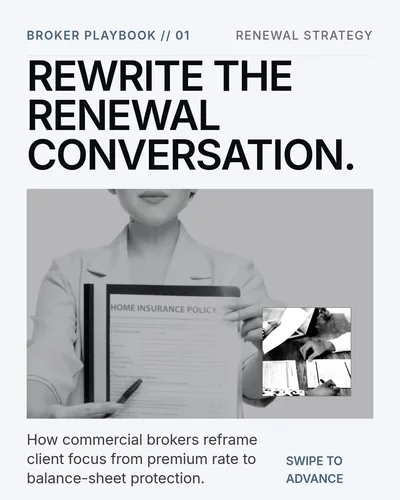
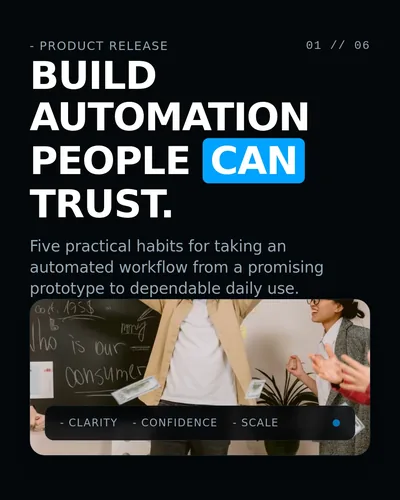
Turn a help doc into slides
Paste a help doc, release note or approved customer story. SlideDrift drafts the slides; you edit them, then export the PDF for LinkedIn.

Before you post
Upload the PDF as a document post. LinkedIn's help page on document uploads says you can add one from your homepage, a Group or a LinkedIn Page, as a PDF, PPT, PPTX, DOC or DOCX file of up to 100 MB and 300 pages, and recommends PDF for the best quality. You can edit the description after posting but not the document, so open the PDF once before you upload.
If you post from your company's Page, SlideDrift can also schedule the carousel to a connected Company Page on the Pro and Agency plans. Either way, run the LinkedIn carousel checklist first.
FAQ
What should SaaS companies post as LinkedIn carousels?
Carousels that teach: setup guides from help docs, launches explained through the problem they fix, lessons from approved customer stories, founder decisions, onboarding checklists and research summaries that show their method.
Should a SaaS carousel promote features?
Yes, once the reader understands the problem. Frame the feature around the workflow or decision it improves, and bring it in where it helps the reader follow or finish the task.
Can a SaaS company post a carousel from its LinkedIn Page?
Yes. LinkedIn lets you upload a document post from a LinkedIn Page as well as from your homepage or a Group. SlideDrift can schedule to a Company Page on the Pro and Agency plans, or you can export the PDF and upload it yourself.
How do you use customer stories without overclaiming?
Use only details the customer approved, keep each number with its timeframe and scope, and describe what changed when there's no approved result. Ask the customer to check the slides before you post.
How often should a SaaS company post carousels?
As often as your team can back each one with an approved source and a real review. Test carousels alongside text, image and product posts, and let your own results decide what to repeat.