LinkedIn Carousel Templates for Lawyers: 10 Ethical Legal-Education Formats
10 LinkedIn carousel templates for lawyers, written as slide structures for legal education, plus a worked example and confidentiality and advertising checks.

The most useful LinkedIn carousel templates for lawyers are slide structures for legal education: a process explainer, a plain-English glossary, a document checklist, questions to ask before signing, and six more below. Each one gives every slide a job, so you can fill it from an article, client FAQ or talk you've already written. Keep each carousel general, and check it for client confidentiality and against your bar's or regulator's advertising rules before you post.
10 LinkedIn carousel templates for lawyers
Each template below is a slide structure, not a visual design: it sets the job of each slide, in order. Choose a topic (the 30 carousel ideas for lawyers are a good place to start), fit it to a structure, and use the hook examples if your first slide feels flat.
Every template ends on the same closing slide: a one-line general-information note, the jurisdiction and date, and your name, firm and contact details. If you add an ask, make it one calm action; the CTA examples have options.
1. Process explainer
Walk readers through a legal process they dread, one step per slide.
Slides: what starts the process → each step in order → where people get stuck → what to ask a lawyer → closing slide.
First slide: "What happens after you receive a demand letter?"
Watch for: steps and deadlines depend on the jurisdiction and the matter, so name your jurisdiction early.
2. Plain-English glossary
Define the words people sign without understanding, such as indemnity, force majeure, assignment and liquidated damages.
Slides: why these words matter → one term per slide, with a plain definition and why it matters → a recap → closing slide.
First slide: "8 contract terms to understand before you sign"
Watch for: define each term as it's used where you practice, and say where that is.
3. Document checklist
Help someone arrive at a first meeting prepared.
Slides: the situation → one document per slide, with why it helps → what to do if something is missing → questions to write down beforehand → closing slide.
First slide: "What to gather before your first employment-law consultation"
Watch for: keep it to preparation. A checklist shouldn't hint at how a matter will turn out.
4. Timeline guide
Show what happens when, and where the decisions fall.
Slides: what starts the clock → each stage, with a typical range → the decision points → what can change the timeline → closing slide.
First slide: "A business acquisition, stage by stage"
Watch for: give ranges and say what changes them. A single number reads like a promise.
5. Myth vs. reality
Correct the beliefs that lead people into trouble, one per slide.
Slides: why these myths matter → one myth per slide, with what's actually true and a better question to ask → closing slide.
First slide: "5 trademark myths founders believe"
Watch for: every "reality" is a statement of law, so check each one for your jurisdiction and date the post.
6. Questions to ask before you sign
Give readers better questions for a decision instead of answers about their own case.
Slides: the decision → one question per slide, with why it matters → red flags → when to get advice → closing slide.
First slide: "Before you sign a commercial lease, ask these questions"
Watch for: red flags that drift into advice. "A renewal clause you haven't read" is general; "never accept automatic renewal" tells the reader what to do.
7. Risk map
Show where problems tend to start in a common document or process.
Slides: the document or process → one risk area per slide, with why it matters → what reduces the risk → when to get help → closing slide.
First slide: "Where contract risk usually hides"
Watch for: describe risks in general terms, and don't rate a reader's own exposure.
8. Scenario explainer
Teach a principle through a made-up situation.
Slides: the fictional scenario → the issue it raises → the general principle → what would change the answer → closing slide.
First slide: "Two co-founders, no agreement, and one wants out: the questions that follow"
Watch for: build the scenario from scratch, not from a client's matter. Calling a story hypothetical doesn't protect a client that readers could still recognize (see the confidentiality check below).
9. Recent development
Explain a change in the law or a new decision, and what it means for one group of readers.
Slides: what changed, and when → who it affects → what it doesn't change → what readers might check now → the source → closing slide.
First slide: "What the new [rule] changes for employers, and what it doesn't"
Watch for: put the date, jurisdiction and source on the slides, because the PDF can travel without your caption.
10. Decision tree
Help readers see which situation they're in and when they need advice.
Slides: the starting question → one branch per slide → what each branch usually involves → where to get advice → closing slide.
First slide: "Do you need a trademark search before you file?"
Watch for: end every branch at "talk to a lawyer about your facts," never at an answer for the reader's own case.
Check confidentiality and your advertising rules
This is general information about posting, not legal or ethics advice. The ABA's Model Rules of Professional Conduct serve as a model for the ethics rules of most jurisdictions, so the rules that bind you are your own state's, or your regulator's if you practice outside the US. Check every carousel against them on these five points, and put it through any review your firm requires:
- Client confidentiality. ABA Model Rule 1.6 bars revealing information relating to a client's representation unless the client gives informed consent or another exception applies. ABA Formal Opinion 480 applies that duty to blogs and other public commentary: it covers information already in a public record, and calling a story hypothetical doesn't avoid a breach if readers could still work out who the client is. If the Solicitors Regulation Authority (SRA) regulates you, paragraph 6.3 of its Code of Conduct for Solicitors requires you to keep current and former clients' affairs confidential unless the law requires or permits disclosure or the client consents.
- Nothing false or misleading. Model Rule 7.1 bars false or misleading communications about a lawyer or the lawyer's services, and its comment says that covers all of them, advertising included. The comment also explains that a true report of past results can still mislead if it leads readers to expect the same result without regard to their own facts and law, and that a statement can mislead if it makes readers think they must act when no action is required. Paragraph 8.8 of the SRA Code requires publicity about your practice, including your charges, to be accurate and not misleading.
- Specialist claims and contact details. Model Rule 7.2 bars stating or implying that you're a certified specialist unless an organization approved by an appropriate state authority or accredited by the ABA certified you, and the communication names it. The same rule requires communications about your services to include the name and contact information of at least one lawyer or firm responsible for their content, which is why the closing slide carries yours.
- Follow-up messages. Under Model Rule 7.3, a solicitation is contact aimed at a specific person you know, or should know, needs legal help with a particular matter, offering help with it. Its comment says a communication directed to the general public isn't one. Paragraph 8.9 of the SRA Code bars unsolicited approaches to members of the public, other than current or former clients, to advertise your legal services. Keep both in mind before you message people who reacted to a post.
- Comments. Opinion 480 also notes that when readers can comment and ask questions, lawyers should take care not to form a lawyer-client relationship by accident, and it suggests disclaimers where practicable. If a reader describes their own situation, don't advise on it in the comments; point them to how your firm takes on new matters.
Worked example: a contract checklist carousel
Here is template 6 filled in for one audience. Swap in your own audience, jurisdiction and source.
Worked example
Completed brief: a contract checklist carousel
Reader: founders and operators about to sign a services contract. They aren't lawyers.
Source: an article or client FAQ on contract review that your firm has already published.
Claim boundary: questions to ask, not answers about anyone's contract. No statements about what a court would decide, no outcomes, and nothing from a client matter.
Nine slides:
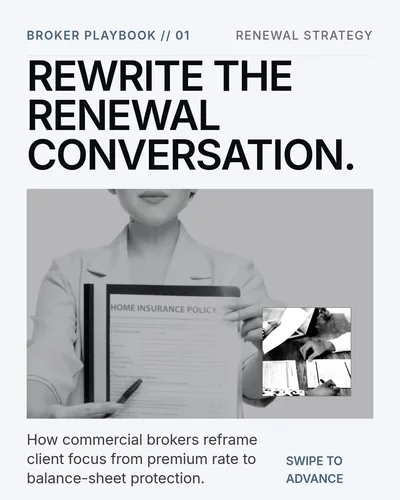
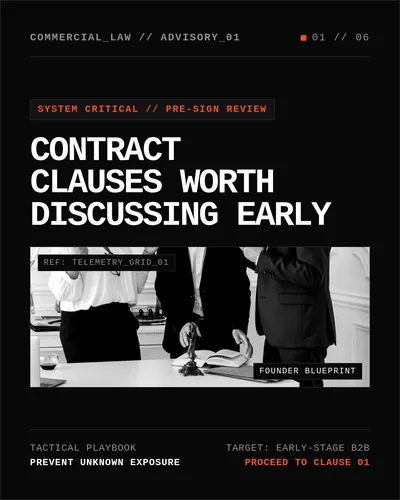
- Cover: "Before you sign a services contract, check these 7 clauses."
- Scope of work: is everything you're paying for written down?
- Payment terms: when is each payment due, and what happens if one is late?
- Termination: who can end the contract, how, and with how much notice?
- Liability: is there a cap, and does it apply to both sides?
- Confidentiality: what must each side keep private, and for how long?
- Dispute resolution: where and how will disagreements be settled?
- Renewal: does the contract renew automatically, and when must you give notice to stop it?
- Closing slide: "General information, not legal advice. Get advice on your own contract." Then your name, firm, contact details, jurisdiction, and the month and year.
Caption: who the carousel is for, then one question, such as "Which of these clauses do you check first?"
Before posting: the five checks above, then your firm's review if it has one.
Every clause slide asks a question instead of stating a rule, so the carousel is useful wherever the reader is and never tells them what to do with their own contract.
Make one in SlideDrift
Start from something you've already written and checked: a client FAQ, a published article, a newsletter or talk notes. Paste it into SlideDrift under a brief like this one:
SlideDrift brief
Turn the article below into a LinkedIn carousel for founders and operators who are about to sign a services contract. They are not lawyers.
Structure: questions to ask before you sign. A cover slide, one slide per clause (scope of work, payment terms, termination, liability, confidentiality, dispute resolution, renewal), then a closing slide.
Each clause slide: the clause in plain English, one question to ask, and why it matters.
Closing slide: "General information, not legal advice. Get advice on your own contract." Then [name], [firm], [contact details], [jurisdiction] and [month and year].
Tone: plain English and careful.
Don't: advise on anyone's own contract, promise outcomes, say what a court would decide, or mention clients.

[Paste your article or FAQ here]
Copy the brief, or press Recreate to open SlideDrift with it filled in; nothing is generated until you press Generate. Before you do, open Preferences and set Slides to 9, because the slide count comes from there, not from the text in the box. If the article is already published, you can start from its link instead: put the link on its own line in place of the pasted text, and SlideDrift reads the page and keeps your brief. If your source is a PDF, such as a client guide, paid plans can start from the PDF.
SlideDrift drafts the slides. Check every legal statement, the jurisdiction and the closing slide yourself before you export: LinkedIn's guidance on AI-assisted posts says you review, edit and approve what you post, and you're responsible for it.
Make a carousel from your client FAQ
Paste a client FAQ, an article or talk notes with your brief. SlideDrift drafts the slides; you check each one against your rules, then export the PDF.

Before you post
When the slides are right, click Share, then Export, then Download PDF, and open the file once before you upload it. Post it as a document: LinkedIn's help page on document uploads recommends PDF for the best quality and says viewers can download the file. You can edit the post's description after posting but not the document, so the general-information note, jurisdiction and date belong on the slides, not only in the caption.
If you post from your firm's Page, SlideDrift can schedule the carousel to a connected Company Page on the Pro and Agency plans; scheduling to a personal profile needs a paid plan. Either way, run the LinkedIn carousel checklist first.
FAQ
What are the best LinkedIn carousel templates for lawyers?
Structures that teach: process explainers, plain-English glossaries, document checklists, timelines, myth vs. reality, questions to ask before signing, risk maps, fictional scenarios, recent-development explainers and decision trees. Each gives every slide one job and ends with a general-information note and your contact details.
How do I keep a legal carousel educational rather than advice?
Explain how things generally work, name the jurisdiction and date, and use questions and made-up scenarios instead of conclusions about anyone's case. Put a general-information note on the slides, and don't advise on a reader's own situation in the comments.
Can I use a client's matter in a carousel?
Only if your rules allow it. Under ABA Model Rule 1.6, that generally means the client's informed consent or another exception, and ABA Formal Opinion 480 says the duty covers information in public records too. A story labeled hypothetical can still breach it if readers could identify the client, so build scenarios from scratch.
Is an educational carousel advertising?
It can be. ABA Model Rule 7.1 covers every communication about a lawyer's services, not only ads, so hold any carousel that names your firm or invites readers to get in touch to its standard: true and not misleading. Then check what your own bar or regulator adds.
How many slides should a legal carousel have?
Enough for one idea per slide, plus a cover and a closing slide. The worked example above uses nine. In SlideDrift, set the count in Preferences before you press Generate.