LinkedIn Carousel Examples for Product Managers
35 LinkedIn carousel examples for product managers, from decision memos and roadmap tradeoffs to metric lessons and retros, each with a slide plan.
The most useful LinkedIn carousels for product managers walk through a decision: the problem, the options, what you chose and why. Good examples include decision memos, roadmap tradeoffs, discovery recaps, metric lessons, feature teardowns and retros, each told as a general lesson with anything confidential left out. Below are 35 example ideas in seven groups, each with the notes to build it from and a slide plan.
- Decisions and tradeoffs: what you chose, what you gave up and why.
- Roadmaps and prioritization: how you rank work and explain the order.
- Customer discovery: what interviews and support tickets can and can't tell you.
- Metrics: a number that misled you, and the better question.
- Feature teardowns: design choices in products anyone can try.
- Specs and release notes: writing that helps a team build the right thing.
- Launches and retros: what you expected, what happened and what changed.
Show the reasoning, not the roadmap
Most product work is invisible from the outside. A shipped feature looks simple, but the work happened in the tradeoffs: what you didn't build, which risk you accepted, what you learned afterward. A carousel can walk through that reasoning one slide at a time, and product decisions already run in order: problem, constraint, options, decision, result.
You don't need confidential details to do it. The lesson is the part other PMs can use. The customer, the numbers and the unreleased plans can stay inside your company.
35 carousel examples for product managers
These are ideas to adapt, not posts by real people or companies. Tell each one from your own experience, and skip any idea you can't tell without private details. If you post for your company's LinkedIn Page rather than your own profile, the SaaS carousel examples fit that job better.
Decisions and tradeoffs
Build these from decision memos, meeting notes and the reasoning behind work that has already shipped.
- "How we decide what not to build"
- "How to decide whether to ship a smaller version first"
- "What to include in a product decision memo"
- "How to decide what goes behind a feature flag"
- "How to use constraints as design inputs"
Weak first slide: "Some thoughts on prioritization."
Better first slide: "Your most-requested feature might be the wrong thing to build next."
The better version names a tension the reader has felt, and the decision process follows. The first slide examples have more openers.
Slide plan: the problem → the options → the constraint → the decision → why → what you gave up → the lesson.
Roadmaps and prioritization
Build these from planning docs and roadmap reviews, but share the reasoning, not the roadmap. Leave out unannounced features and dates.
- "Why roadmap certainty is usually fake"
- "A simple way to evaluate feature requests"
- "How to compare two product opportunities"
- "Why a backlog is not a strategy"
- "How to make roadmap updates less political"
Slide plan: the goal → the constraints → the options → how you ranked them → what moved, and why.
Idea 9 is planned in full in the worked example below.
Customer discovery
Build these from interview notes, call summaries and support ticket themes, with names and anything that identifies a customer removed.
- "The difference between a user request and a product problem"
- "What customer interviews can and can't tell you"
- "How to turn support tickets into roadmap themes"
- "How to separate founder feedback from user evidence"
- "How to turn a customer call into a product insight"
Slide plan: the signal → the pattern → what it means → what it doesn't prove → what you'll test next.
Metrics
Build these from dashboards, experiment readouts and metric reviews. The lesson is in the reasoning, so you rarely need the real numbers: say what the metric measured and why the first reading was wrong.
- "The metric that looked good but hid the real problem"
- "The difference between activation and retention work"
- "What to ask before adding a dashboard metric"
- "Why product-market fit isn't one metric"
- "The difference between adoption, engagement and value"
Slide plan: the metric → the first reading → why it misled → the better question → what to check instead.
When you can share data, the research carousel templates include slides for charts and caveats.
Feature teardowns
Build these from products anyone can sign up for, or from your own features once they're public. Describe only what a user can see, and keep the tone fair to the team that built it.
- "Why small UX details become adoption blockers"
- "A practical product teardown template"
- "How to evaluate AI features without chasing novelty"
- "Why internal tools deserve product thinking too"
- "Five questions to ask before changing a pricing page"
Slide plan: the example → the user's need → the design choice → the tradeoff → what you'd copy.
Specs and release notes
Build these from your own specs, release notes and review comments, with the real product swapped for a made-up example. Show a weak version beside a better one.
- "How to write a problem statement that doesn't smuggle in the solution"
- "Why 'make it easier' isn't a product requirement"
- "How to write better acceptance criteria"
- "What belongs in a release note, and what doesn't"
- "The PM checklist before shipping a workflow change"
Slide plan: the weak version → why it fails → the better version → the rule → a checklist.
Launches and retros
Build these from retros, launch reviews and stakeholder updates, once the work is public or the lesson stands without it. In a retro, describe the gap in the process, not a colleague's mistake.
- "How to run a useful beta without collecting noise"
- "Why every launch needs a post-launch learning plan"
- "What product teams can learn from churn reasons"
- "How to communicate delays to stakeholders"
- "How to say no without sounding dismissive"
Slide plan: what you expected → what happened → what you learned → what you changed → what you'd do next time.
If you plan launches with a product marketer, the product marketing guide has more launch formats.
Keep confidential details out
Decide what stays private before you write the first slide. Swap each private detail for a general version that still carries the lesson:
Private detail, public version
| Private detail | What to write instead |
|---|---|
| A customer's name or logo | The kind of customer, described broadly enough that nobody can tell who it is: "a B2B team", "a first-time admin". |
| An unannounced feature or launch date | The decision pattern behind it, or wait until it's public. |
| Revenue, usage or conversion numbers | What the number told you and what you did next. |
| An internal codename or tool | A plain description of the job it does. |
| A colleague's mistake | The process gap that let it happen. |
| Security issues, legal matters or contract terms | Nothing. Leave them out. |
Check your company's social media policy as well, and ask your manager when you're unsure. Take private details out before you paste notes into any outside tool, SlideDrift included.
A worked example: why a backlog is not a strategy
Here's idea 9 planned as a brief and an eight-slide outline. It's an example to adapt, not a real team's post.
Worked example
Completed brief: why a backlog is not a strategy
Lesson: a backlog is a list of possible work; a strategy decides which problem matters most now.
Source: your notes from a roadmap review where the backlog kept growing and priorities kept shifting.
Kept private: the product, the customers, the backlog items, dates and numbers.
Public version: "a product team whose backlog keeps growing while its priorities shift".
Eight slides:
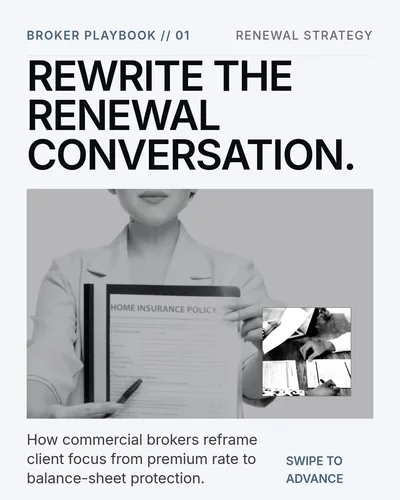
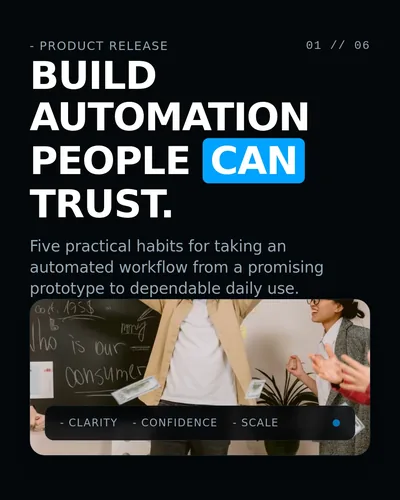
- Cover: "Your backlog is not your product strategy."
- A backlog is a list of possible work.
- Strategy is a decision about which problem matters most now.
- A long backlog can hide weak prioritization: every request gets a ticket, and nothing leaves.
- A useful roadmap starts with goals, constraints and customer evidence.
- The question to ask: "What will we stop doing?"
- Checklist: outcome, audience, evidence, constraint, risk.
- Close: "Save this before your next roadmap review."
Next step: take the checklist to your next roadmap review.
Every slide makes one point, and none of them names the product, a customer or a date.
Make one in SlideDrift
Start with notes you already have, such as a decision memo, a retro or an interview summary, with the private details taken out. Paste them into Create with an instruction like this one:
SlideDrift brief
Turn my notes below into a LinkedIn carousel for product managers.
Lesson: a backlog is a list of possible work, not a strategy.
Keep the reasoning: the options, what we chose, what we gave up and why.
Leave out names, unreleased features, dates and internal numbers.
End with a five-point checklist for the next roadmap review.
Tone: plain and practical. Make no claims my notes don't support.

[Paste your notes here, with private details already removed]The number of slides comes from Preferences (7 by default), not from your text, so set Slides to 8 for the outline above before you press Generate.
SlideDrift drafts the slides, and you edit them. Check each slide against your notes: an AI draft can smooth over the tradeoff, so put back the option you rejected and the reason. LinkedIn's guidance on AI-assisted posts expects a post to reflect your own view and says you're responsible for it, and the guide to reviewing AI-written drafts covers what to check. When the deck is ready, click Share, then Export, then Download PDF.
Make a carousel from your notes
Paste a decision memo, retro or interview summary with the private details removed. SlideDrift drafts the slides; you edit them, then export the PDF for LinkedIn.
Before you post
Read the deck once more as an outsider would. If a customer or a competitor could learn something from it that they shouldn't, cut it.
Then upload the PDF as a document post. LinkedIn's help page on document uploads accepts PDF, PPT, PPTX, DOC and DOCX files of up to 100 MB and 300 pages, and recommends PDF for the best quality. You can edit the post's description after posting but not the document, so run the LinkedIn carousel checklist first. On a paid plan, SlideDrift can also schedule the carousel to your connected LinkedIn profile.
FAQ
What should product managers post as LinkedIn carousels?
Posts that show how you think: decision memos, roadmap tradeoffs, discovery lessons, metric mistakes, feature teardowns, spec-writing tips and retros. Each one should end in a lesson another PM can use.
How can I share product lessons without leaking confidential details?
Tell the decision, not the roadmap. Describe the kind of customer instead of naming them, leave out unannounced features, dates and internal numbers, and describe process gaps instead of people. Check your company's social media policy, and ask your manager when you're unsure.
Can I use AI to draft a carousel about my product work?
Yes. LinkedIn's guidance welcomes AI-assisted posts that reflect your own view once you've reviewed and edited the draft, and it asks you to disclose heavy AI use. Take private details out of your notes before you paste them into any AI tool.
How many slides should a product manager's carousel have?
Enough for one lesson, with one point per slide. The slide count guide suggests 6 to 10 as a practical range, and the worked example above uses 8. In SlideDrift, set the number in Preferences before you press Generate.